

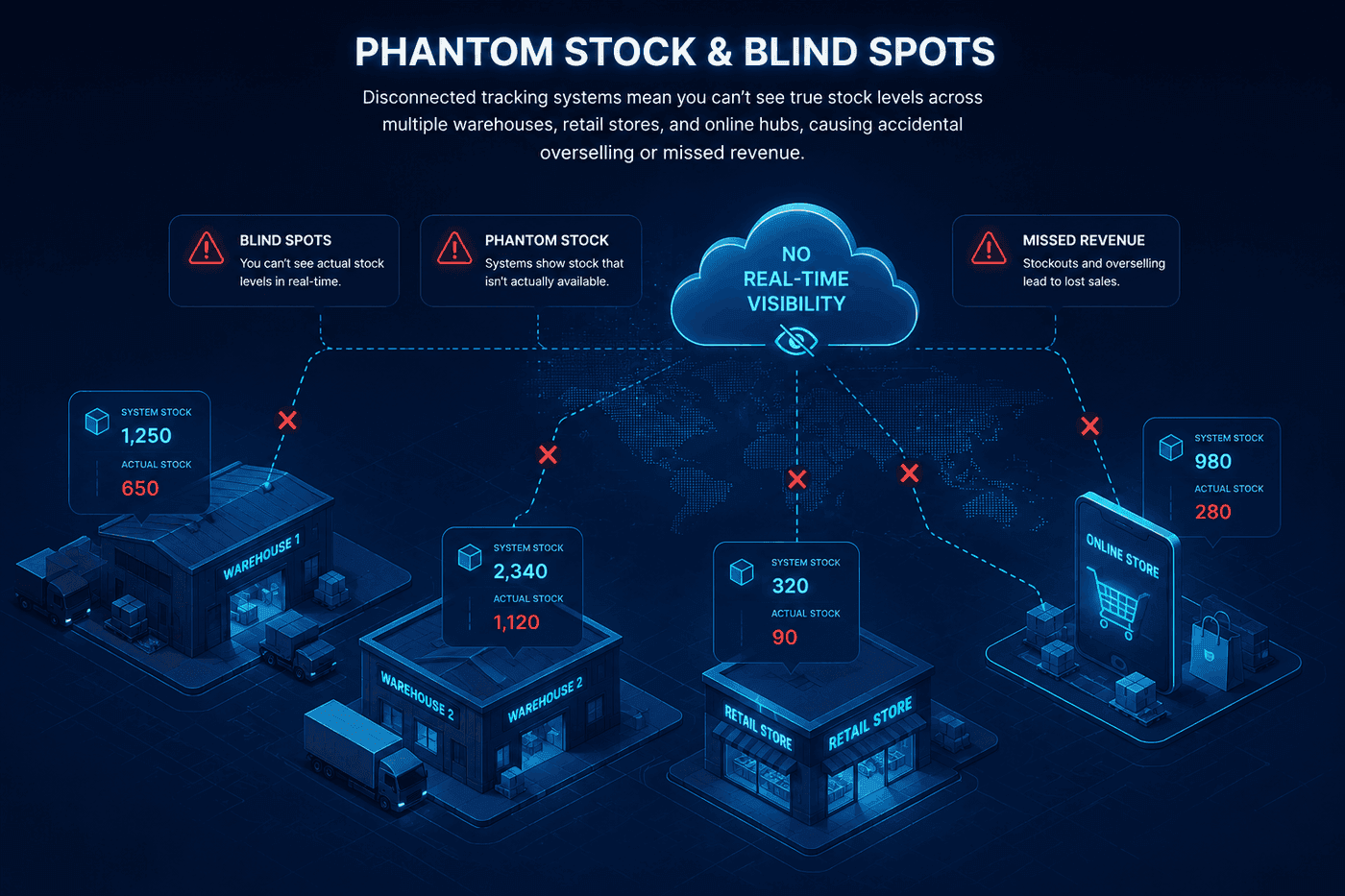
Phantom stock & blind spots
Disconnected tracking systems mean you can't see true stock levels across multiple warehouses, retail stores, and online hubs, causing accidental overselling or missed revenue.



Retail & E-commerce
Your inventory is your largest working capital investment. UpArrow Systems designs, implements, and manages unified inventory platforms built to eliminate stockouts, prevent overstocking, and keep your multi-channel fulfillment fast, accurate, and resilient.
Before we talk about solutions, we need to talk about what's actually broken. These are the most common operational bottlenecks we hear from product and logistics teams across the region.
Disconnected tracking systems mean you can't see true stock levels across multiple warehouses, retail stores, and online hubs, causing accidental overselling or missed revenue.

Without precise demand forecasting, warehouses accumulate slow-moving merchandise, locking up vital cash flow and running up expensive storage overheads.
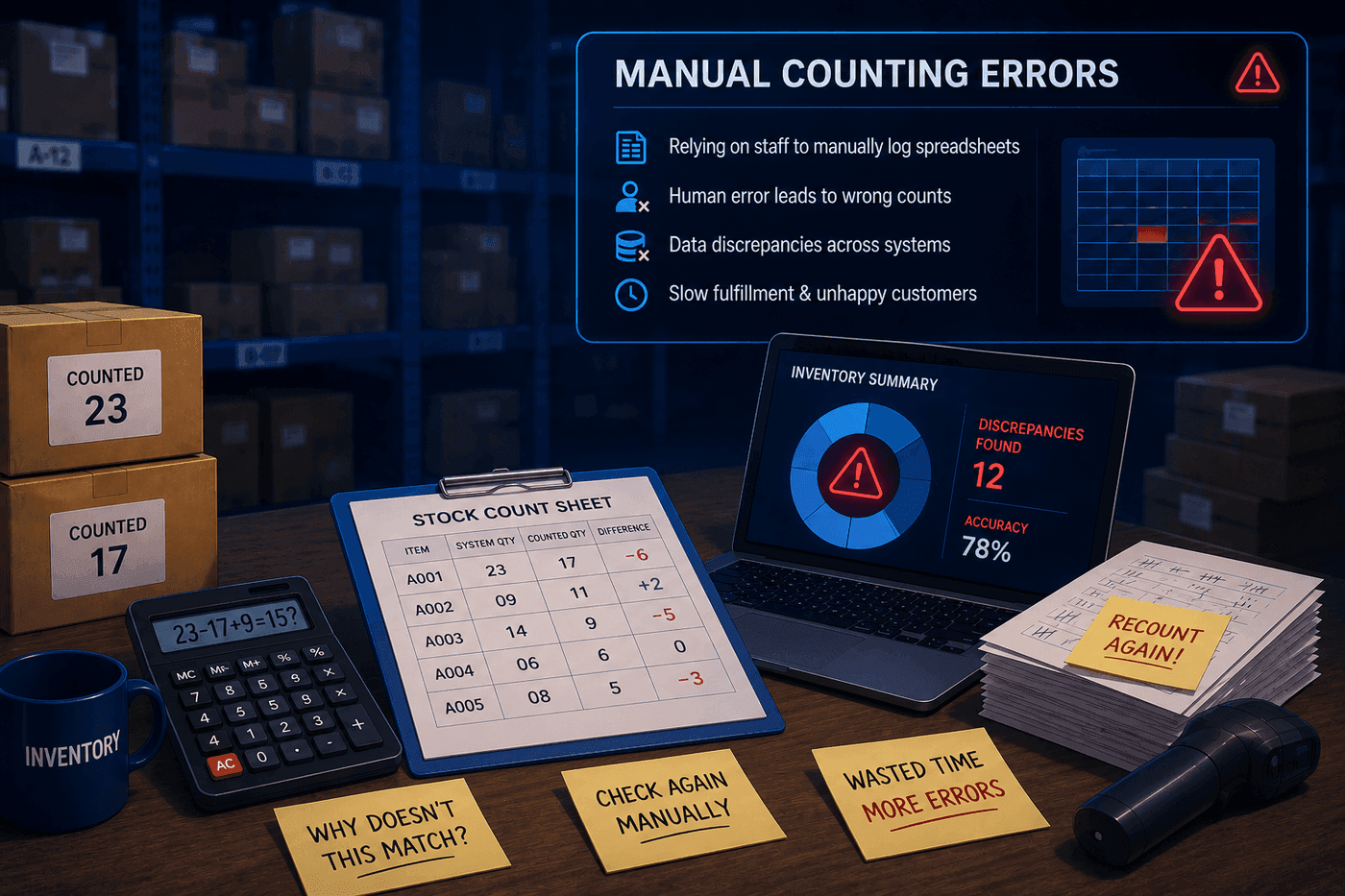
Relying on staff to manually log spreadsheets and scan items opens the door to human error, massive data discrepancies, and slow fulfillment cycles.
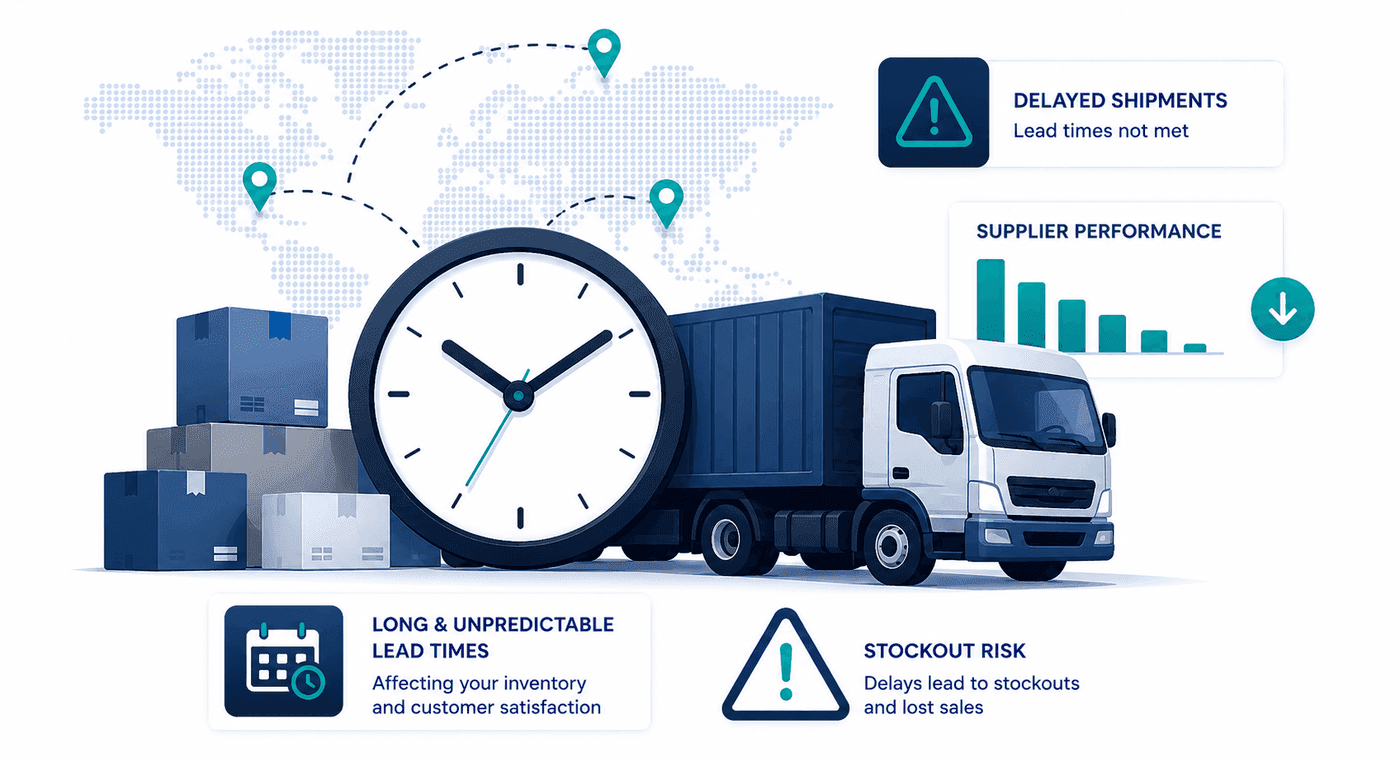
Lack of automated reorder thresholds means you purchase stock too late, leaving customers waiting and giving your faster competitors the advantage.
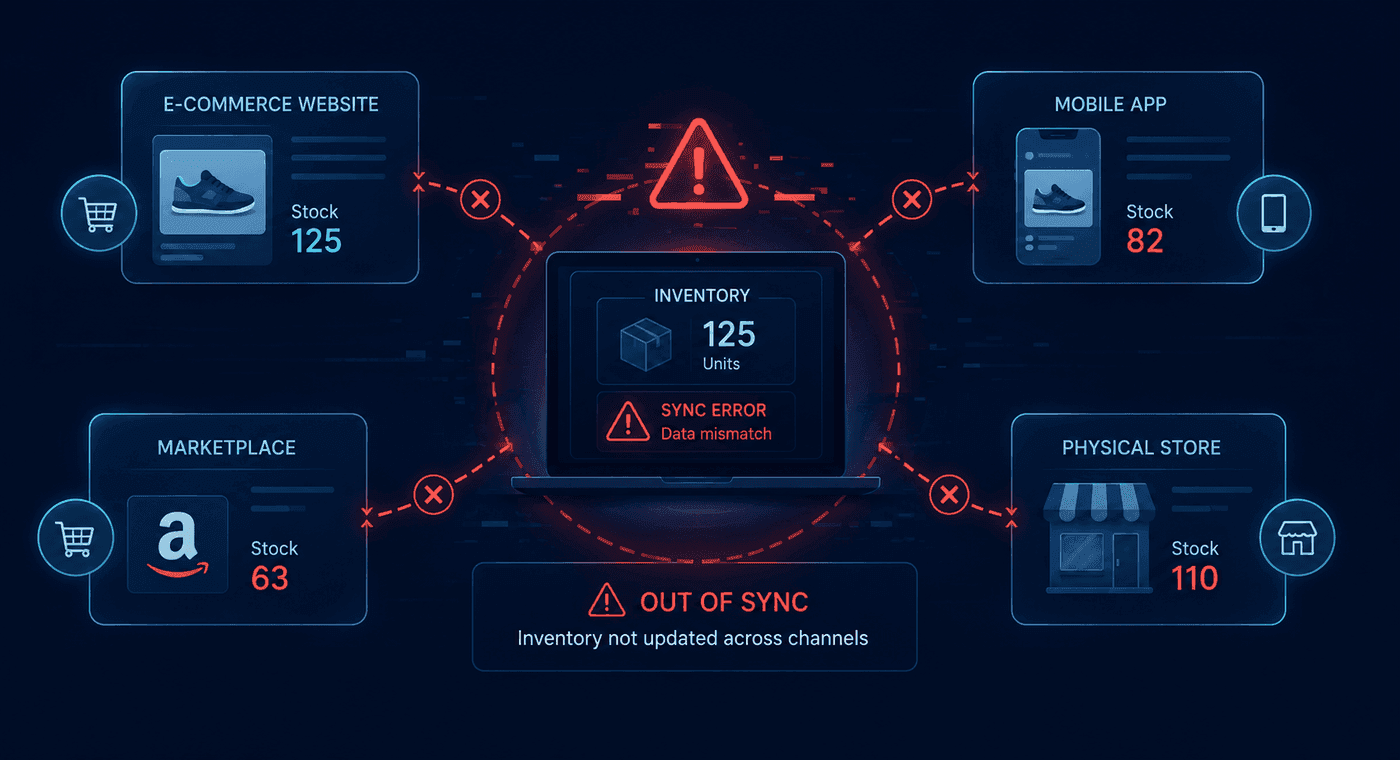
Selling across web, mobile, marketplace, and physical retail without instant synchronization results in fragmented fulfillment and highly frustrated customers.
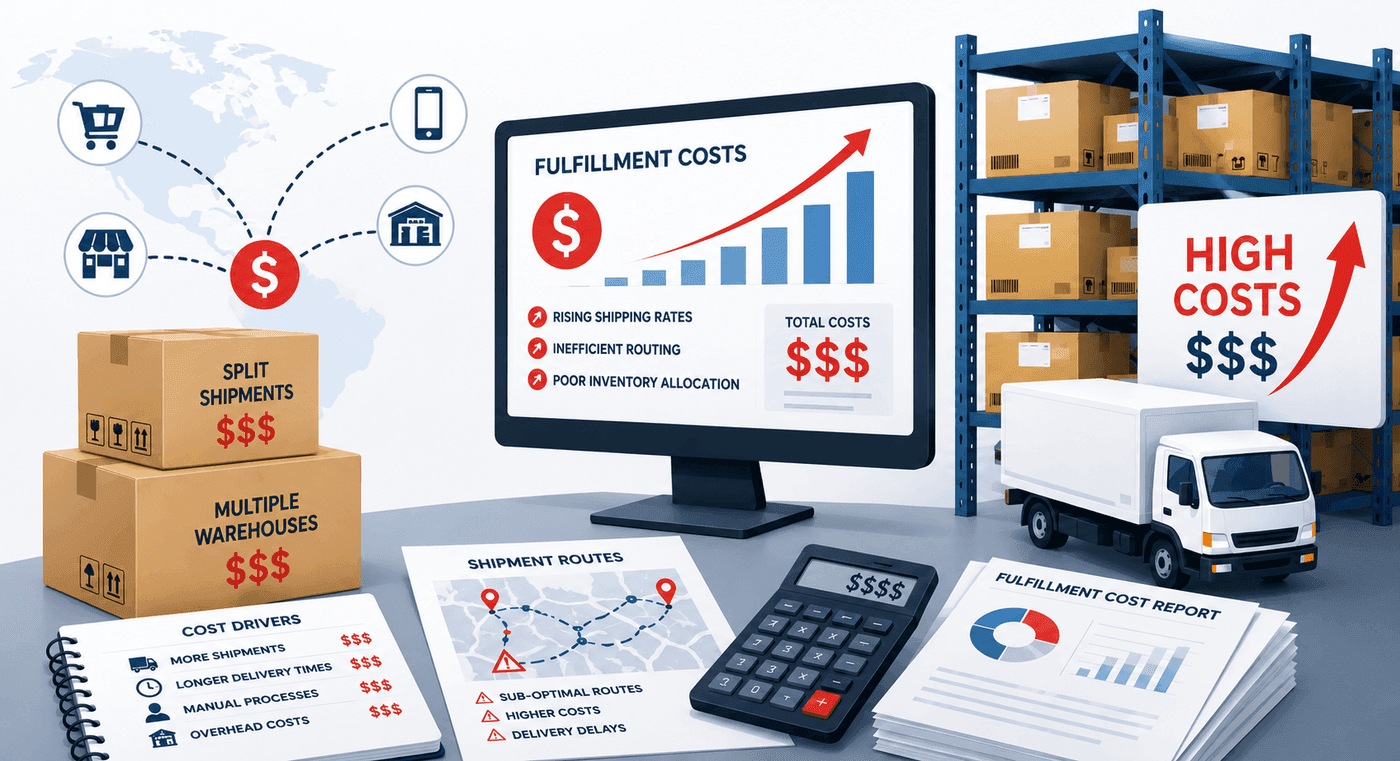
Orders are routed from sub-optimal locations, skyrocketing shipping rates and extending delivery times because inventory isn't intelligently allocated.
We design, build, and operate intelligent inventory ecosystems that bridge warehouses, supply chains, and sales channels into a single source of truth. From core system deployment to complex multi-channel integrations, we optimize every layer of your stock lifecycle.

Deploy and refine robust Inventory Management Systems tailored specifically to your SKU architecture, warehousing setup, and operational fulfillment workflows.
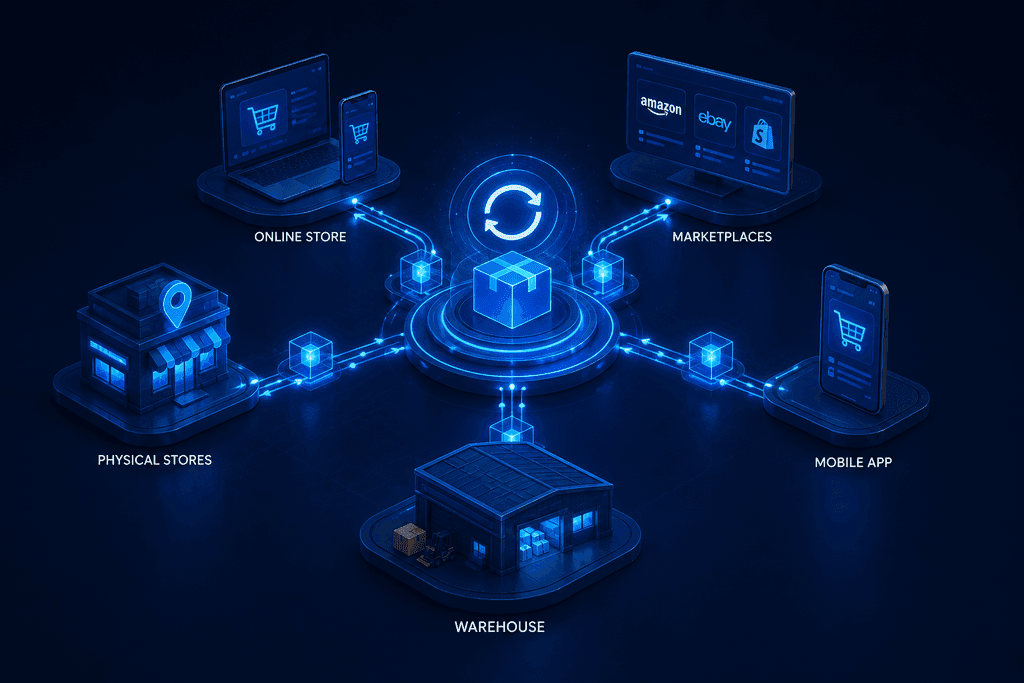
Unify stock pools across all digital storefronts, marketplaces, and physical retail locations to handle simultaneous transactions smoothly without double-selling.
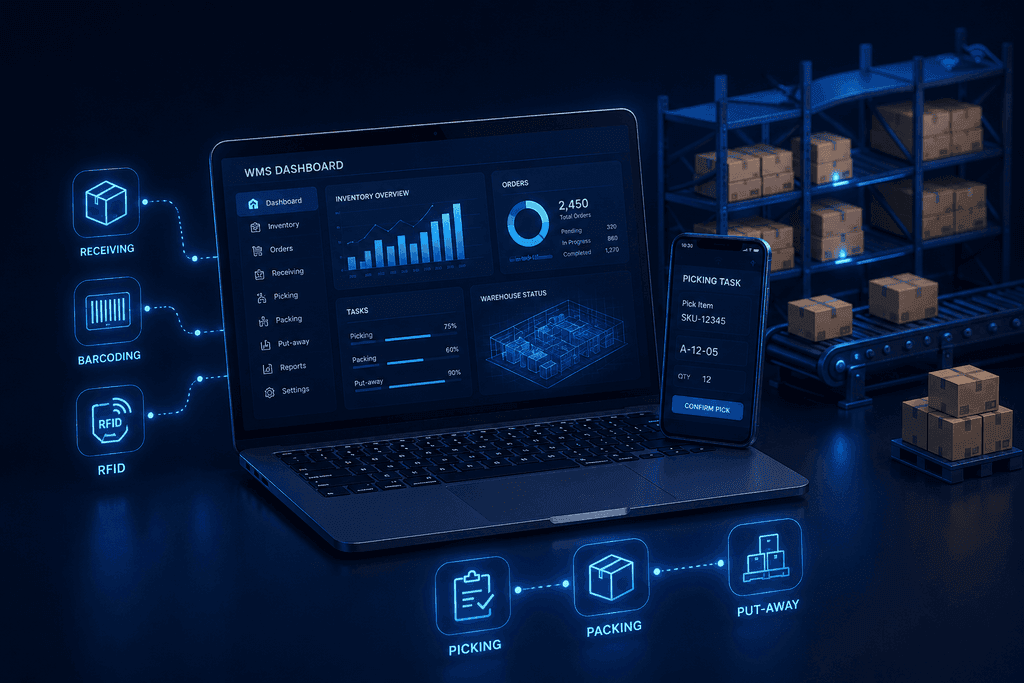
Bridge your inventory software seamlessly with physical Warehouse Management Systems (WMS) to automate picking, packing, receiving, and put-away tasks.

Integrate inventory data deep into enterprise ERP frameworks to automate procurement pipelines, vendor communication, and financial ledger logging.

Implement data-driven reporting that examines historic sales trends, seasonal patterns, and market demands to automatically flag optimal reorder points.
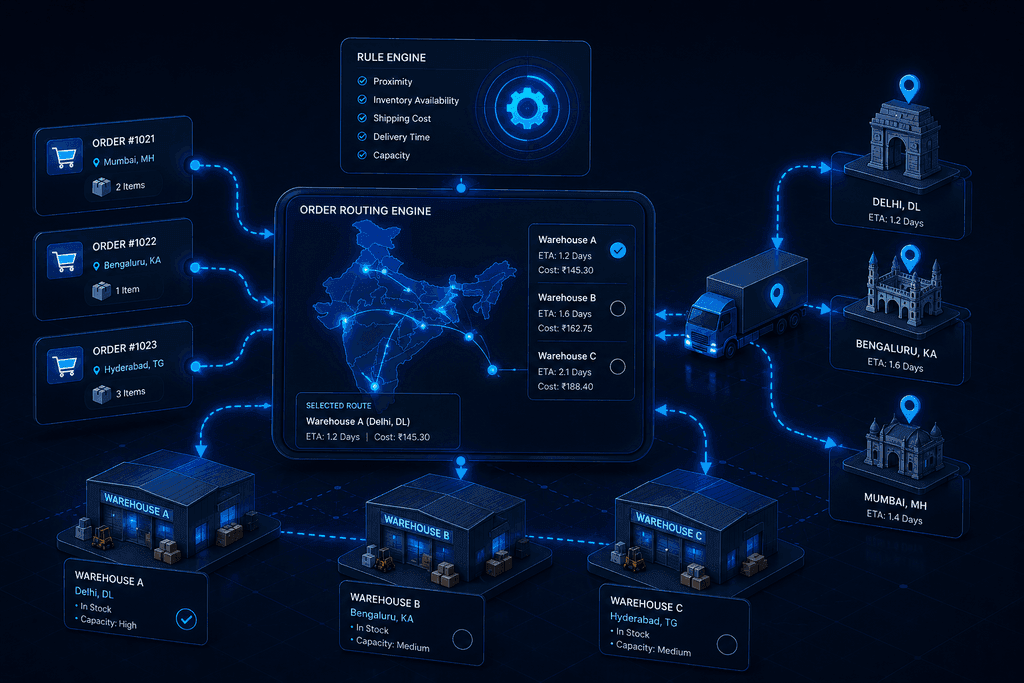
Architect rule-based order routing engines that dynamically assign shipments to the closest warehouse or storefront, lowering shipping costs and times.
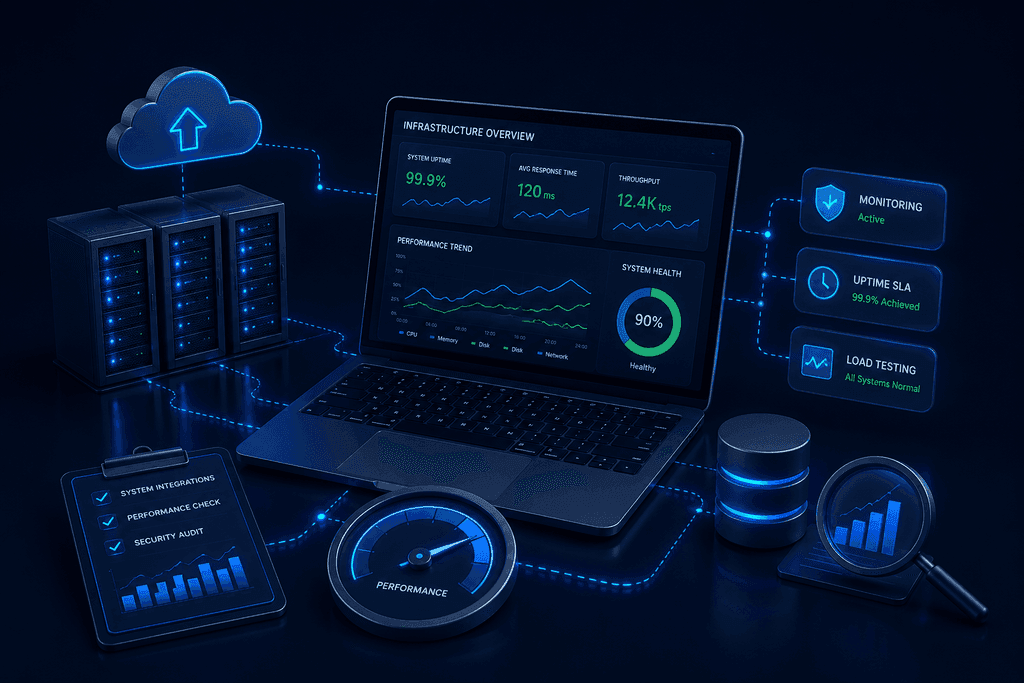
Continuously monitor system integrations to guarantee massive transaction volumes during peak events never drop connections or lag out stock data updates.
How we deliver your inventory platform
We assess your existing SKU taxonomy, supply chain steps, active sales channels, and physical warehouse footprints to outline the ideal software architecture.
We select the ideal IMS/WMS tool stack for your scale and construct a data flow model detailing exactly how inventory, purchase orders, and sales data talk to one another.
Our engineers build out the system, configure catalog workflows, and connect the core inventory engine to your front-end commerce apps, shipping carriers, and back-end ERPs.
We run intensive stress tests on data sync times, trigger simulated flash sales to verify real-time stock deductions, and conduct end-to-end user acceptance testing.
We launch the unified inventory sync with a dedicated tech response team on standby, monitoring inventory pipelines and data loops to resolve any edge-case errors instantly.
Post-launch, we deliver continuous optimization, run security updates, tweak auto-reorder formulas, and scale the platform capabilities as you expand your product lines.
Keep your cash moving by only carrying inventory that sells, backed by smart predictive data.
True real-time synchronization keeps digital storefronts accurate, preventing brand-damaging order cancellations.
Direct integrations and intelligent routing rules get orders packed and shipped to customers hours faster.
Monitor exactly where every single item sits—whether it’s on a shelf, in transit, or on a showroom floor.
Eliminating manual spreadsheet logs removes human error and saves your warehouse staff hours of administrative time every day.
Leverage clear supplier performance metrics and historical data to negotiate better bulk rates and schedules.
Talk to our retail technology specialists about your current platform challenges and what a future-ready inventory management could look like for your business.


